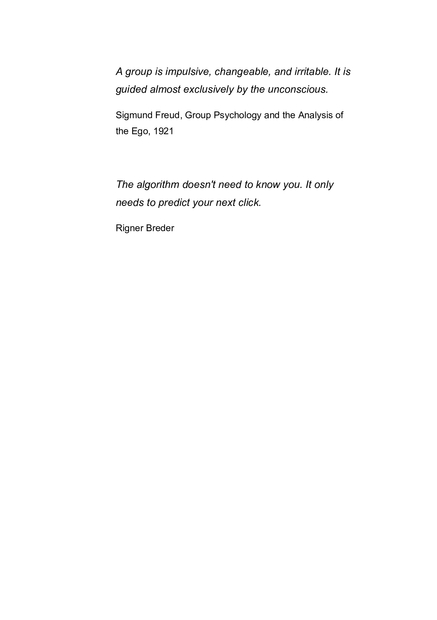
Freud said, over a hundred years ago, that every crowd needs a leader. Today, that leader might be an algorithm.
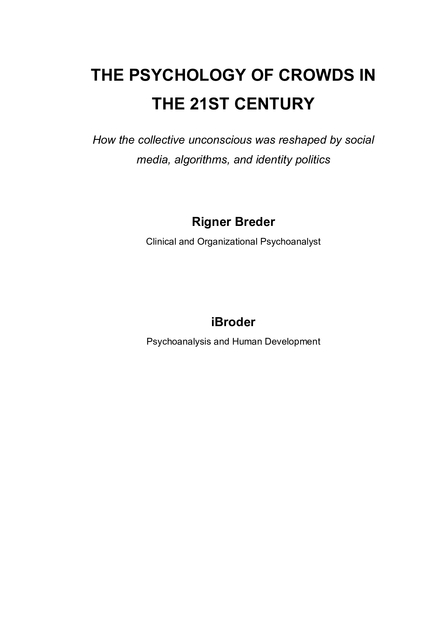
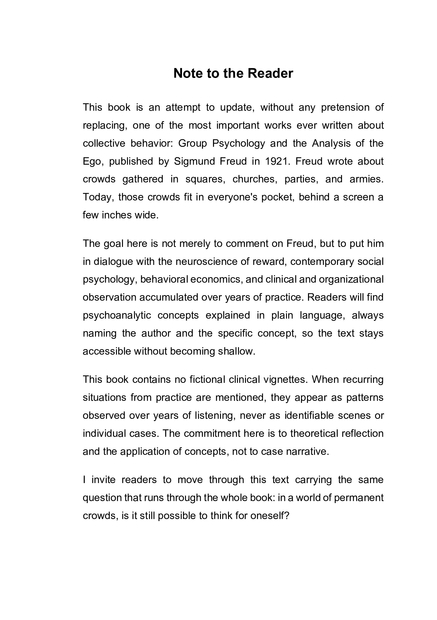
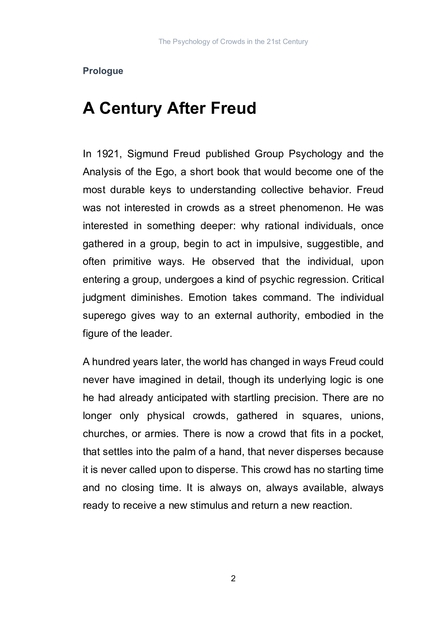
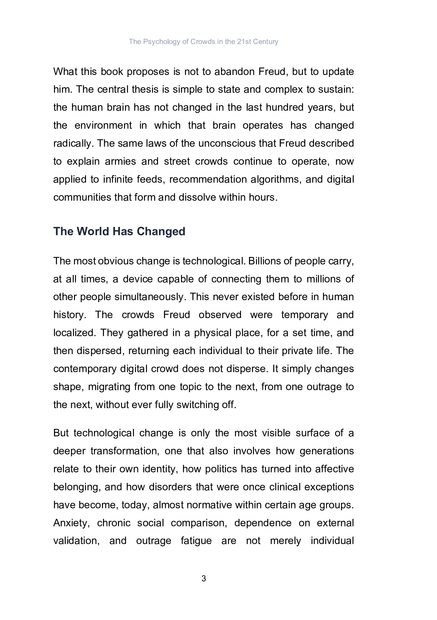
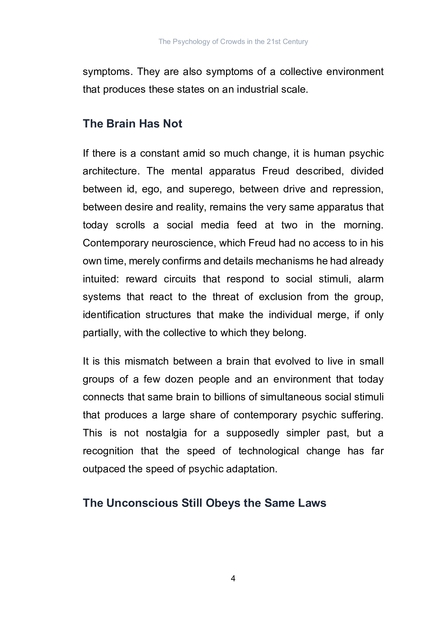
In The Psychology of Crowds in the 21st Century, psychoanalyst Rigner Breder updates one of the most important works ever written on collective behavior, Freud's Group Psychology and the Analysis of the Ego, to explain the world of social media, influencers, and political polarization.
If Freud studied crowds gathered in squares, churches, and armies, this book shows how the crowd has migrated into everyone's pocket. It no longer disperses. It never sleeps. It never stops influencing.
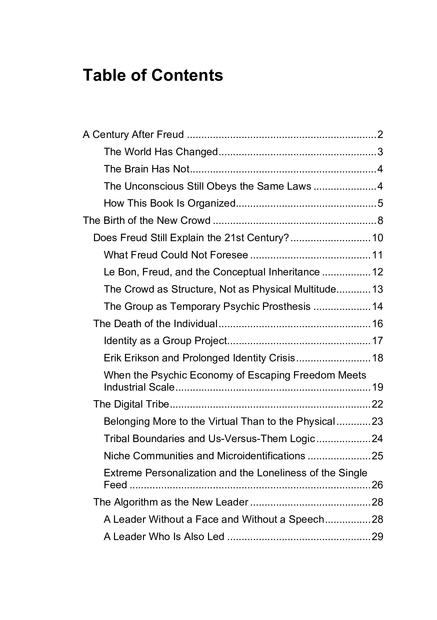
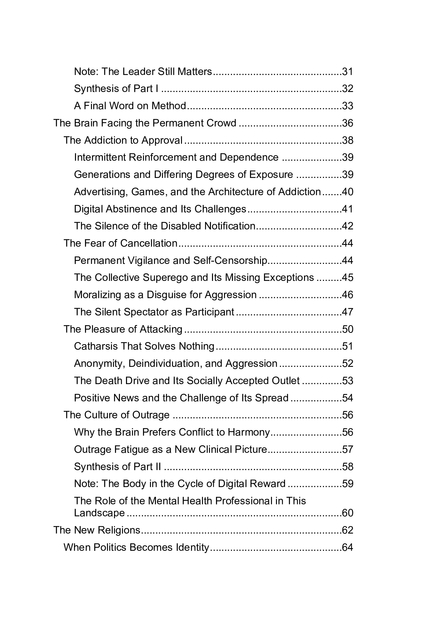
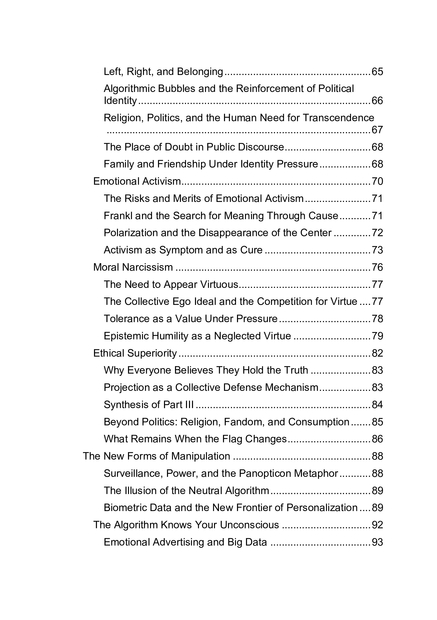
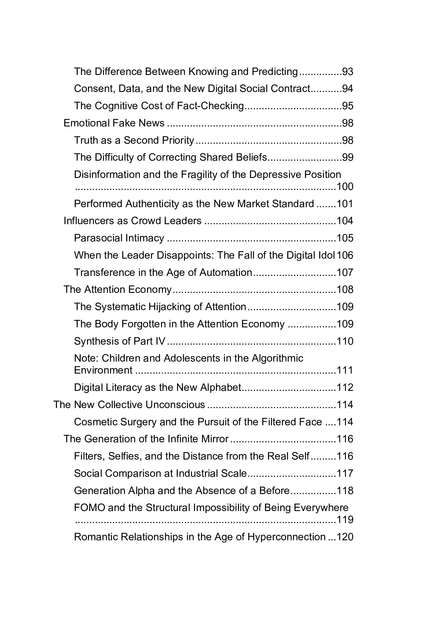
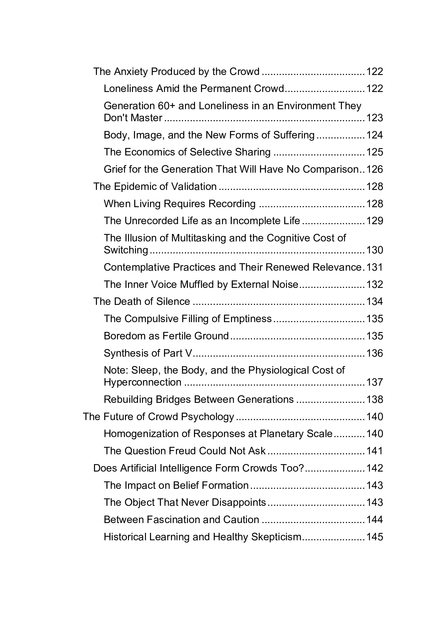
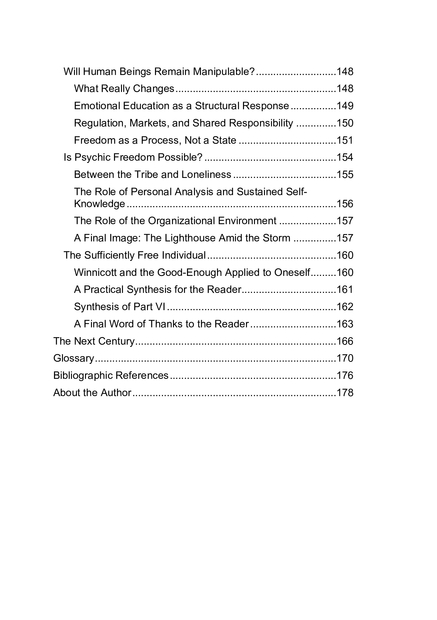
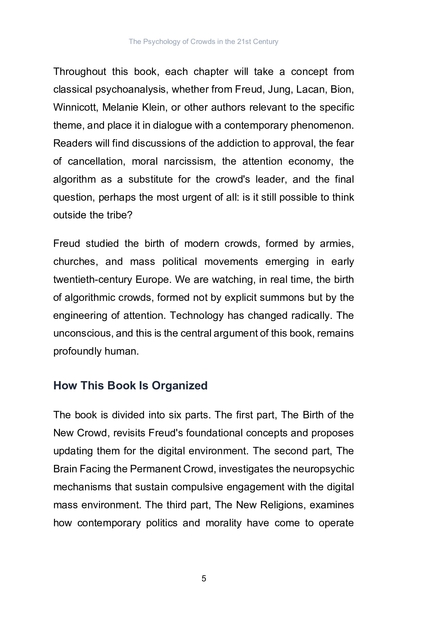
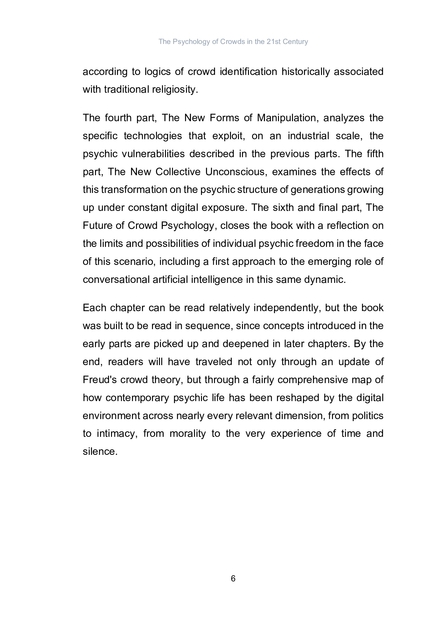
Across 24 chapters organized into six parts, the book examines the addiction to approval, the fear of cancellation, moral narcissism, the attention economy, and the question that runs through the entire work: is it still possible to think for oneself amid the permanent noise of everyone else?
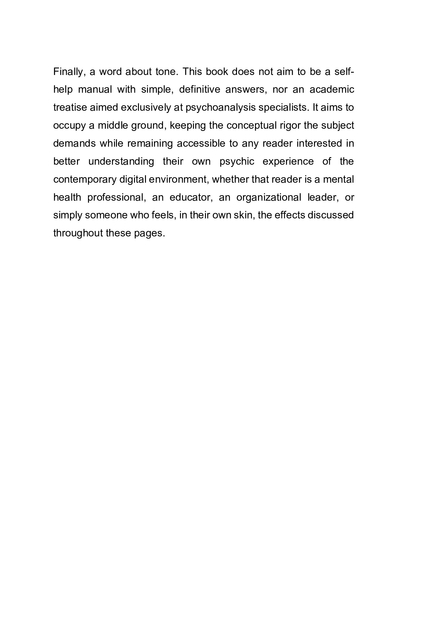
Weaving together Freud, Le Bon, Jung, Lacan, Bion, Winnicott, Melanie Klein, Erich Fromm, and other voices from the psychoanalytic tradition with observations on generations, technology, and contemporary mental health, this book offers a rare kind of reading: rigorous enough for specialists, accessible enough for anyone who feels, in their own life, the effects of the digital world on their psyche.
A book for anyone who wants to understand why it's so hard to disagree with their own group, why outrage spreads faster than joy.
| Número de páginas | 196 |
| Edición | 1 (2026) |
| Formato | A5 (148x210) |
| Acabado | Tapa blanda (con solapas) |
| Coloración | Blanco y negro |
| Tipo de papel | Ahuesado 80g |
| Idioma | Portugués |
¿Tienes alguna queja sobre ese libro? Envía un correo electrónico a [email protected]







Haz el inicio de sesión deja tu comentario sobre el libro.