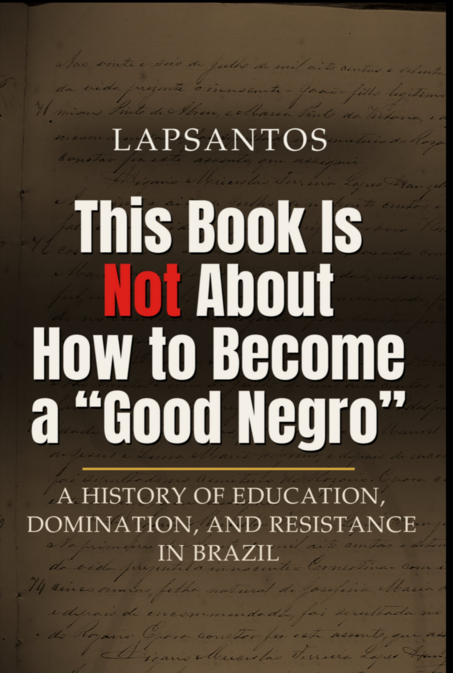
Brazil received more enslaved Africans than any other nation on earth — more than ten times as many as the United States. It was the last country in the Americas to abolish slavery. And it found a weapon quieter than the whip.
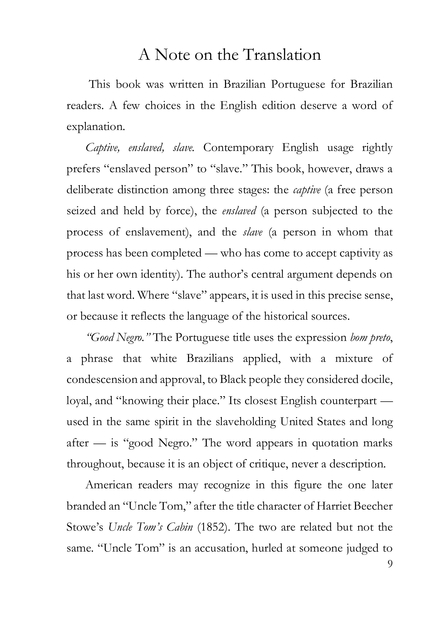
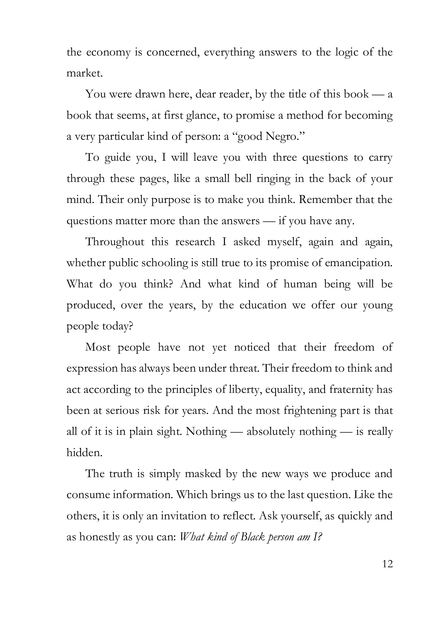
How do you turn a human being into a slave? And then into something more useful still: a "good Negro," someone who defends the very system that holds him?
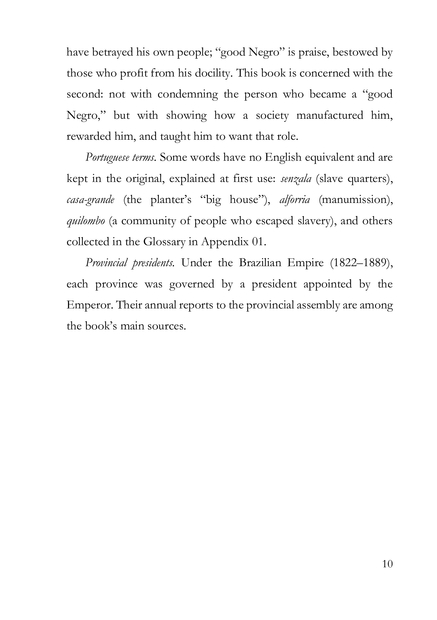
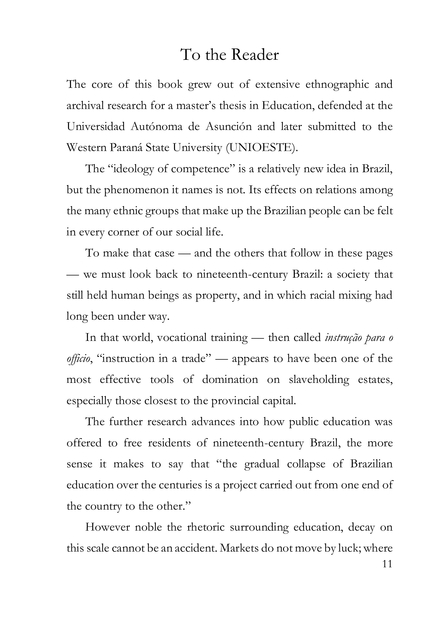
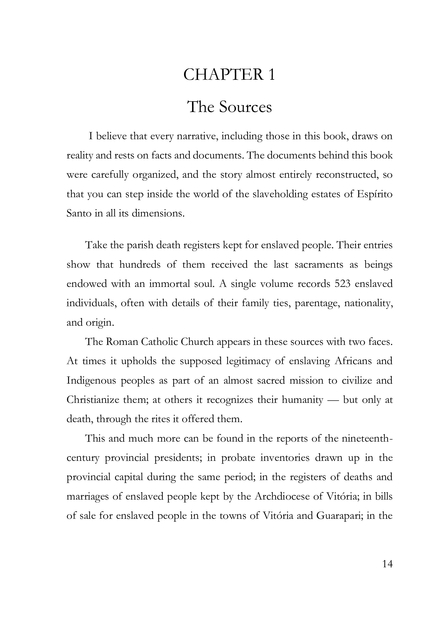
In the parish registers, probate inventories, bills of sale and official reports of nineteenth-century Espírito Santo, historian and educator Lapsantos found an answer hiding in plain sight: education. Teaching the enslaved a trade raised their price on the market. It also shaped obedience, loyalty, and the conviction that their place in the world was fixed.
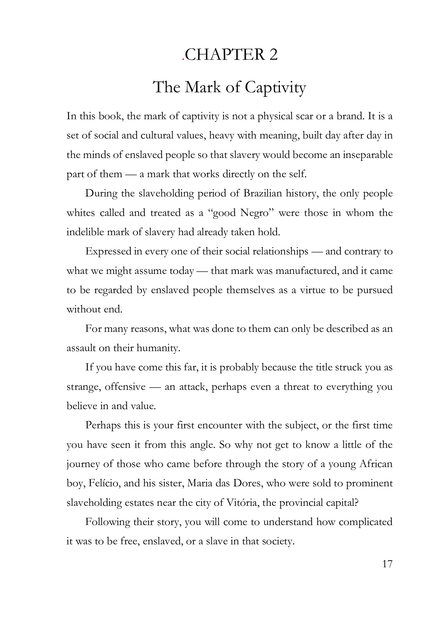
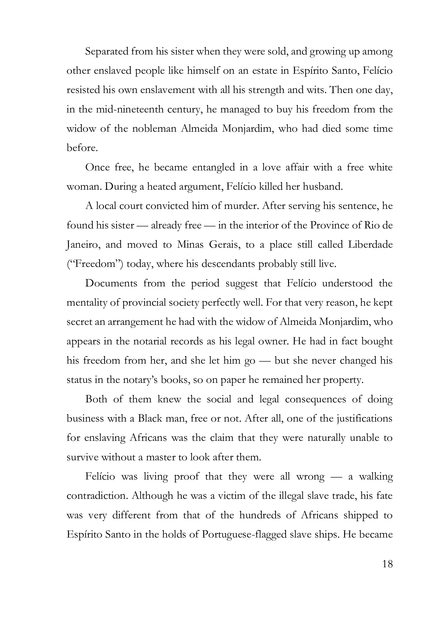
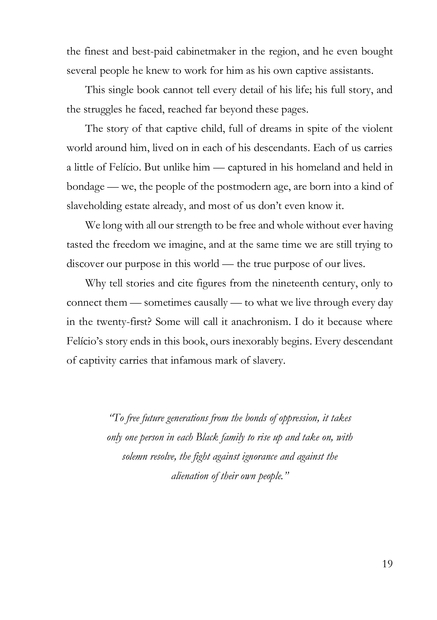
Through the story of Felício, an African boy sold in the slave market of Vitória, and through hundreds of lives preserved only in the ink of the archives, this book follows a person from free human being to captive, from captive to enslaved, and from enslaved to "slave." It shows how a society manufactured the "good Negro," rewarded him, and taught him to want that role.
The result is part history, part reckoning. Its questions reach well beyond Brazil:
What is schooling really for?
Who decides what kind of person an education should produce?
And what remains, today, of the lessons taught on the plantation?
This book is not about how to become a "good Negro."
It is about how a society manufactured one.
For readers of Isabel Wilkerson, Saidi
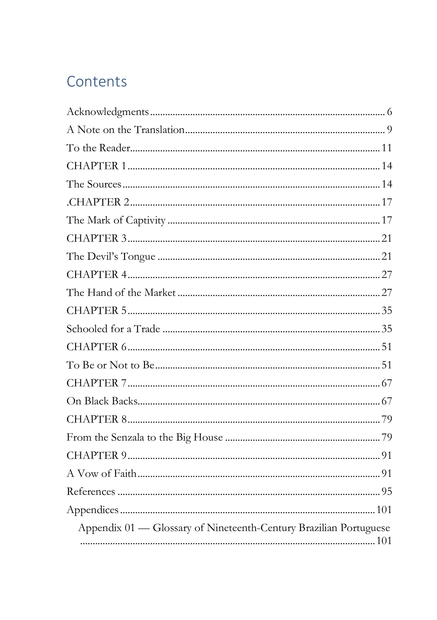
| Número de páginas | 120 |
| Edición | 1 (2026) |
| Formato | A5 (148x210) |
| Acabado | Tapa blanda (con solapas) |
| Coloración | Blanco y negro |
| Tipo de papel | Ahuesado 80g |
| Idioma | Inglés |
¿Tienes alguna queja sobre ese libro? Envía un correo electrónico a [email protected]




Haz el inicio de sesión deja tu comentario sobre el libro.