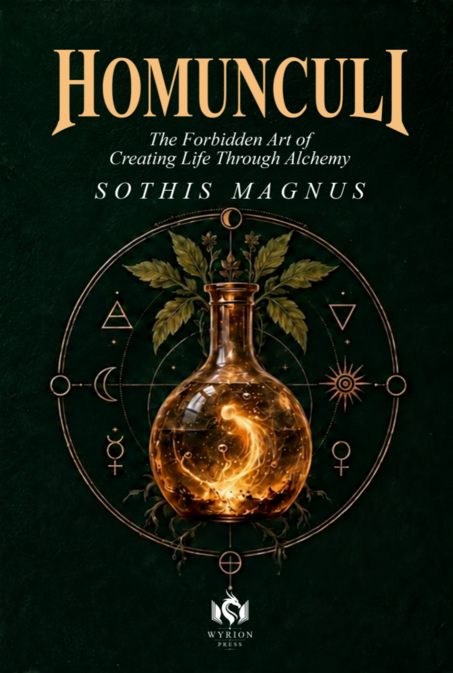
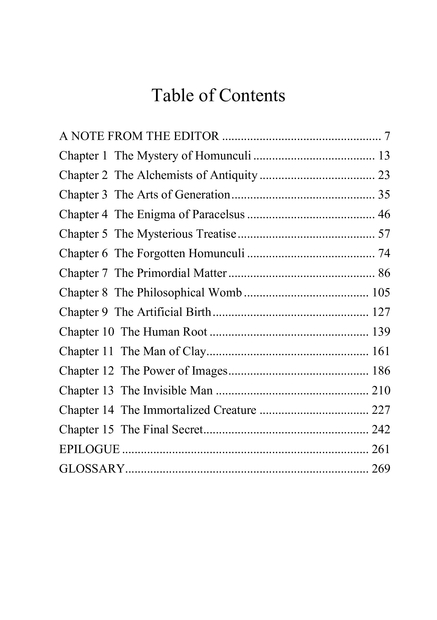
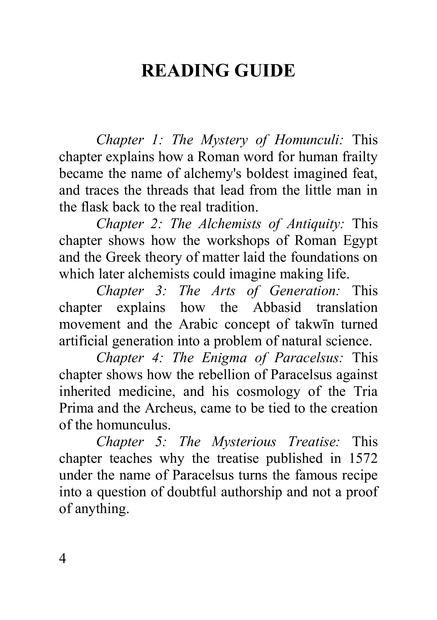
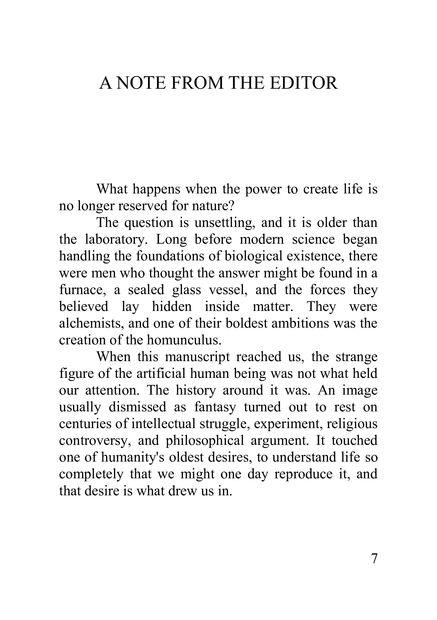
The history of the homunculus reveals how alchemists came to imagine the creation of artificial life—and why that impossible ambition shaped centuries of thought. From ancient laboratories to Renaissance manuscripts, the search for a human being made outside the womb challenged the boundaries of nature, science, and faith.
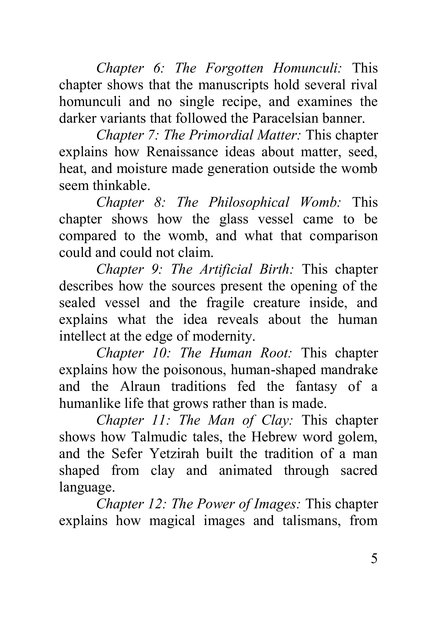
Drawing on Greco-Egyptian alchemy, the Arabic tradition of takwīn, and the writings associated with Paracelsus, Sothis Magnus examines the theories, disputed recipes, and philosophical assumptions behind the legendary little man in the flask. He distinguishes historical sources from later embellishments and follows the remarkable variety of creatures imagined by different traditions.
The investigation reaches beyond the alchemical vessel to the mandrake, the Jewish golem, magical images, and the microscopic homunculus of early embryology. It also traces the figure's afterlife in literature and its echoes in contemporary debates about synthetic biology and human responsibility.
For readers interested in Western esotericism, the history of alchemy, and the origins of scientific ideas, this is a compelling examination of an enduring question: what happens when human beings aspire not merely to understand life, but to create it?
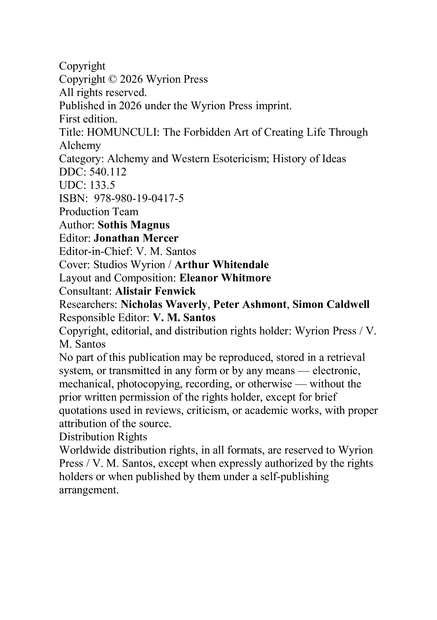
| ISBN | 9789801904175 |
| Número de páginas | 272 |
| Edición | 1 (2026) |
| Formato | A5 (148x210) |
| Acabado | Tapa blanda (con solapas) |
| Coloración | Blanco y negro |
| Tipo de papel | Ahuesado 80g |
| Idioma | Inglés |
¿Tienes alguna queja sobre ese libro? Envía un correo electrónico a [email protected]

Haz el inicio de sesión deja tu comentario sobre el libro.