What does it mean to live well while aging?
Why does quality of life go beyond physical health?
How do relationships, purpose, and autonomy change the experience of a long life?
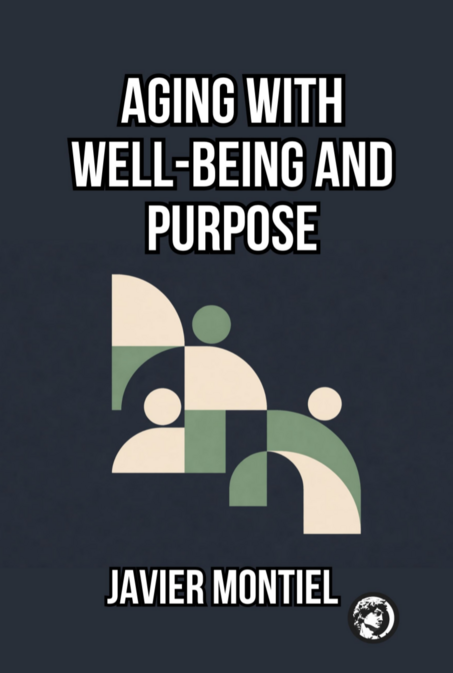
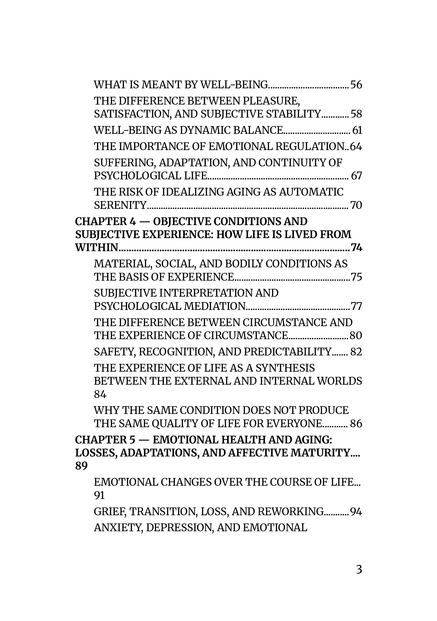
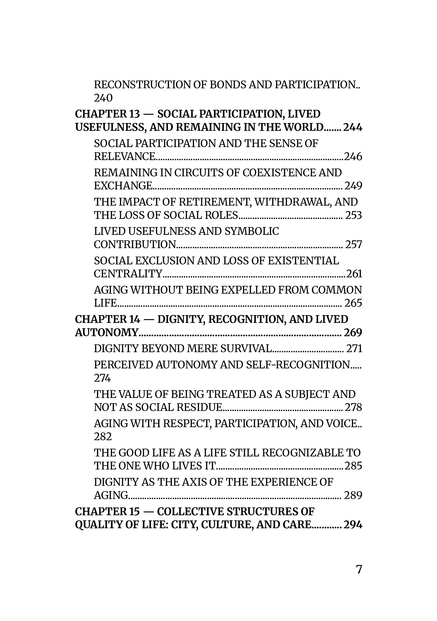
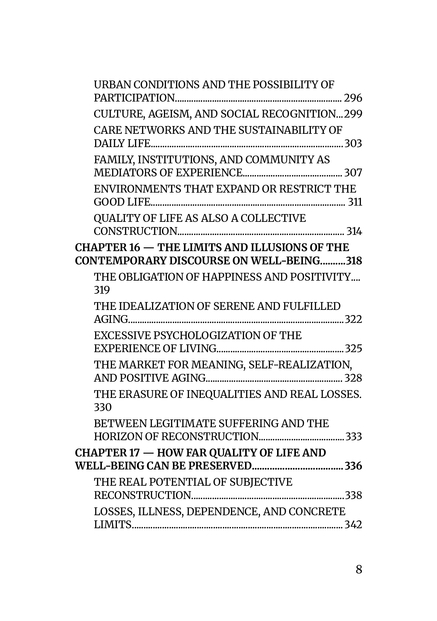
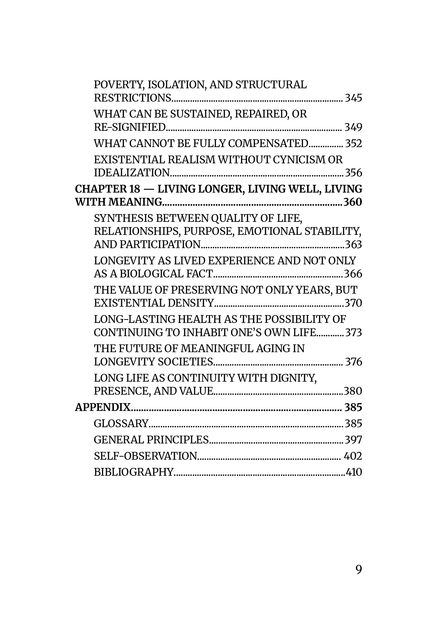
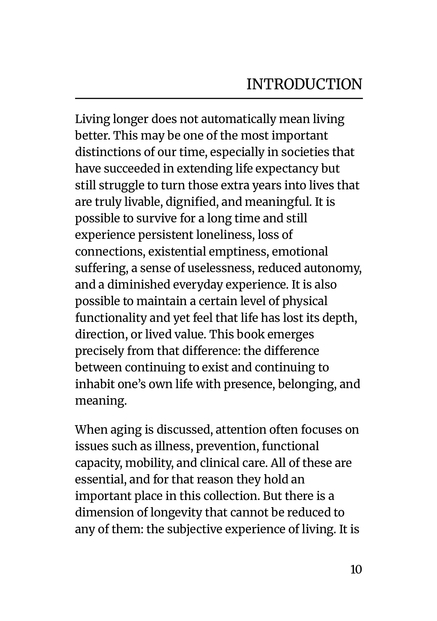
Quality of life in aging involves far more than simply surviving or maintaining basic functions. This book shows that living well over time depends on the relationship between concrete living conditions and subjective experience, including emotional health, relationships, social participation, security, dignity, and meaning. Written in clear language, the book explains why well-being is not constant euphoria, but rather balance, inner continuity, and the real possibility of continuing to inhabit one’s own life with value.
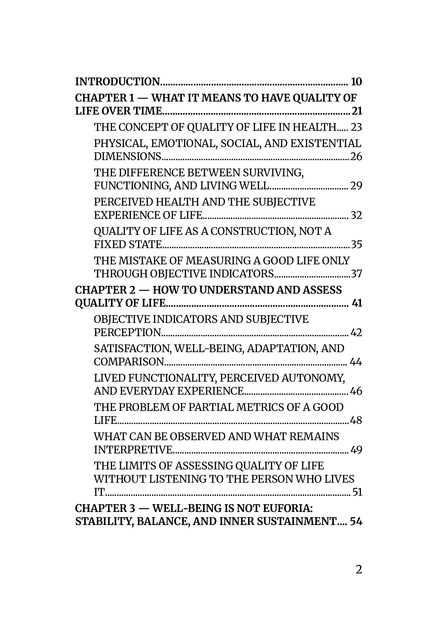
Throughout the book, readers will encounter central themes such as:
• well-being and subjective stability
• emotional health and adaptation to loss
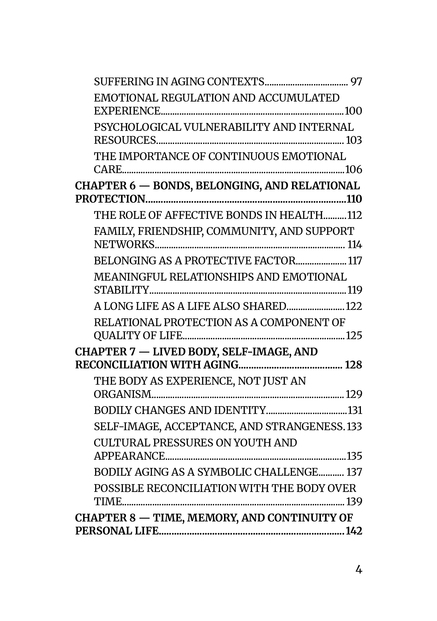
• relationships, belonging, and relational protection
• the lived body, self-image, and aging
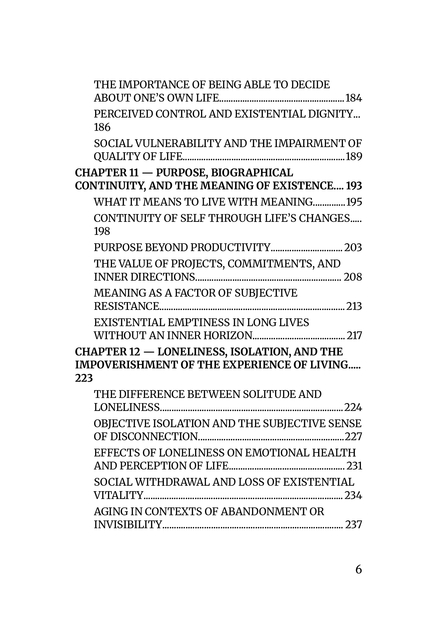
• loneliness, isolation, and social participation
• dignity, recognition, and lived autonomy
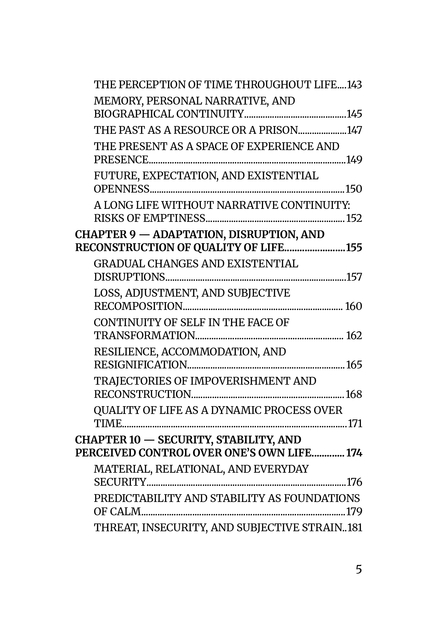
• purpose, meaning, and biographical continuity
In longer-lived societies, understanding quality of life has become essential for thinking about aging, care, and remaining in the world with presence and value.
This book is recommended for students, professionals in health- and aging-related fields, and general readers interested in understanding how to live longer with dignity, relationships, and meaning.
| Número de páginas | 420 |
| Edición | 1 (2026) |
| Formato | A5 (148x210) |
| Acabado | Tapa blanda (con solapas) |
| Coloración | Blanco y negro |
| Tipo de papel | Offset 80g |
| Idioma | Inglés |
¿Tienes alguna queja sobre ese libro? Envía un correo electrónico a [email protected]

Haz el inicio de sesión deja tu comentario sobre el libro.